If you're a newly minted entrepreneur ready to raise your first round of capital, you're probably wondering how to get seed funding. Seed funding for startups is one of the most competitive and consequential stages in a company's journey. The good news? The Southeast has never been a better place to launch, pitch, and fund a tech company.
The seed funding process looks different from what it did even two years ago. Investors are writing more disciplined checks, founder-market fit matters more than ever, and regional ecosystems like Atlanta are producing more venture-backed exits than most national observers realize.
This guide breaks down everything you need to know about venture capital seed funding, from the average check size to the top firms writing checks in the Southeast, plus how Venture Atlanta accelerates your raise.
What Is Seed Funding?
Seed funding is the first significant round of outside capital a startup raises to validate its product, hire early team members, and prove product-market fit. It typically follows any pre-seed or friends-and-family capital and precedes a Series A raise.
Startup seed capital is used to:
- Build and refine a minimum viable product (MVP)
- Hire foundational engineering, product, and go-to-market talent
- Test customer acquisition channels
- Generate the early traction needed to raise a Series A
Pre-Seed vs. Seed Funding
Understanding the difference between pre-seed and seed funding is critical when planning how to get seed funding for your startup.
Pre-seed capital is typically raised before a product is live. Checks range from $50K to $750K and often come from angel investors for startups, friends and family, or micro-funds.
Seed funding happens once a startup has an MVP, early users, or preliminary revenue. This is when institutional seed-stage venture capital firms enter the picture.
How Much Is a Seed Round Today?
The average seed round size in 2026 is approximately $3.1M–$3.2M (median), with AI-focused rounds averaging $4.6M+. The top 25% of deals can exceed $6M. While median post-money valuations have hit a record $24M, pre-money medians are at an all-time high of $16M–$18M due to AI demand.
The revenue bar to raise seed funding has more than doubled since 2021, from $156K to $363K in median ARR. Investors are writing fewer but larger checks to more proven teams.
Key seed funding trends to watch:
- 60%+ of all VC dollars in Q1 2026 went to AI companies
- Down rounds fell to 11.4%, the lowest since 2019–2020
- Regional ecosystems like the Southeast are gaining a share of total seed deployment
Where Does Seed Capital Come From?
The first step in how to get seed funding is knowing where the money comes from. Here's where most seed round investors are found:
Angel Investors
Angel investors and individual high-net-worth investors who invest their own money, often in exchange for equity. They typically invest $25K–$250K (sometimes more!) and are more willing to back riskier ideas early, and some may also provide mentoring. Groups like Atlanta Tech Angels, Women on the Cap Table, and TiE Atlanta Angels are excellent starting points.
Seed Stage Venture Capital Firms
Seed stage venture capital firms operate investment funds and look for startups with the potential to deliver strong returns. While more selective, some venture capital seed funding firms specialize in early-stage investing. They typically invest $1M–$5M at the seed stage and often lead rounds. There are many Southeast investors, such as Knoll Ventures, CoFounders Capital, Front Porch Ventures, Circadian Ventures, Women on the Cap Table, Johnson Venture Partners, and TiE Atlanta.
Accelerators/Incubators
Programs like Y Combinator and Techstars offer capital in exchange for equity and participation in a structured program. These accelerators often open the door to a large network of follow-on investors to help you during the seed funding process.
Friends, Family, and Acquaintances
When raising seed capital, many entrepreneurs turn to friends, family, and acquaintances who believe in their vision. There are often fewer hoops to jump through than with traditional funding avenues, making it faster and easier for startups to get seed funding.
Top Seed-Stage Investors in the Southeast
The Southeast has one of the fastest-growing investor communities in the country. If you're figuring out how to get seed funding in this region, the directory below is your starting point.
TIP: Check out Venture Atlanta’s list of investor funds and VCs that attended the 2025 conference to get an idea of who may be at this year’s conference!
Angel Networks
- Atlanta Tech Angels: Atlanta-based network investing in early-stage tech companies
- TBH Angels: Investing in women-founded startups across the Southeast
- Black Angel Tech Fund: Focused on Black-founded tech companies nationwide
- Charlotte Angel Fund: North Carolina-based angel fund investing in regional startups
- Charlottesville Angel Network: Virginia-based angel network for early-stage companies
- Gathering of Angels: National angel network with a strong Southeast presence
- New World Angels: Florida-based angel network investing in early-stage tech
- TiE Atlanta Angels: Angel arm of TiE Atlanta; sector-agnostic seed investing
- Women on the Cap Table: Investing in and building cap tables that include women + they’re involved in this year’s Startup Showcase Live!
Venture Capital Firms
- Atlanta Ventures: Atlanta-based studio and VC firm investing in B2B SaaS
- BIP Ventures: Multi-stage firm with deep Southeast roots; seed through growth
- Cofounders Capital: North Carolina-based B2B software seed fund
- Florida Funders: Hybrid VC/angel platform investing across Florida and the Southeast
- Front Porch Venture Partners: Southeast-focused seed-stage VC
- Knoll Ventures: Early-stage VC investing in software and tech-enabled services
- Las Olas Venture Capital: Fort Lauderdale-based B2B software seed fund
- Overline VC: Atlanta-based seed fund investing in Southeast founders
- Southeast Investor Group: Regional investor network and fund
- Tech Square Ventures: Atlanta-based seed-stage VC focused on B2B enterprise
- Valor Ventures: Atlanta-based seed-stage firm investing in the "Rise of the Rest"
- VentureSouth: One of the most active seed investor networks in the Southeast
- Women on the Cap Table: Investing in and building cap tables that include women + they’re involved in this year’s Startup Showcase Live!
How to Get Seed Funding: 3 Proven Strategies
If you're serious about learning how to get seed funding, these are the three strategies you need to master.
1. Perfect Your Pitch
Getting seed capital starts with a clear, confident, and compelling pitch.
Be ready to share:
- The problem you're solving and your unique solution
- Your ideal customer and total addressable market (TAM) at the seed stage
- Financial projections and funding needs
- Your founding team's unique qualifications and founder-market fit
Practice your pitch with mentors, advisors, or peers before you get in front of investors. You can also review the most common investor questions to prepare thoroughly or take note of our six steps to help you stand out to investors while pitching.
2. Build a Strategic Network
Building relationships with the right people is often the difference between founders who successfully figure out how to get seed funding and those who stall out. The right introduction can open doors and create opportunities that cold outreach never will.
Here are some ways to build a strong network:
- Joining founder networks like LinkedIn, AngelList, and Slack groups
- Attending local startup events in big Southeastern cities
- Reaching out to fellow founders who've raised capital and asking for introductions
Check out our Atlanta Startup Ecosystem Guide to find local support, communities, and events.
3. Attend a Venture Capital Conference
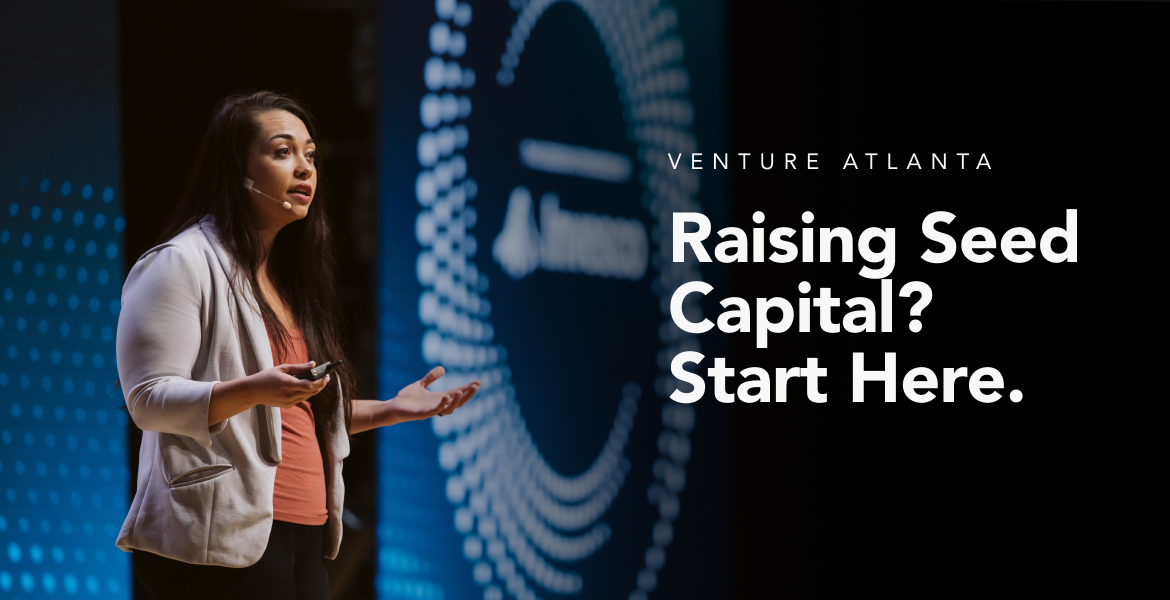
One of the most underrated answers to get seed funding is simply showing up where the investors are. There's no better place to meet seed round investors than at events like Venture Atlanta, the Southeast's largest venture capital conference. Each year, 1,600+ investors, founders, and corporate leaders attend.
Whether you're selected to pitch live on stage or are simply attending to meet founders and connect with investors, you'll walk away with insights, connections, and possibly your next check.
How Does Venture Atlanta Help Seed-Stage Startups?
If you’re wondering how to get seed funding, this is your answer. Venture Atlanta’s Startup Showcase Live is a live pitch competition made exclusively for pre-seed and seed-stage companies. The top 10 applicants get to pitch on stage to Venture Atlanta’s audience of 1,600+ investors, founders, corporations, and tech leaders.
The top four then advance to day two of the conference, where they get to engage in a live Q&A with a panel of judges comprised of partner-level investors from firms across the country.
These judges then determine the overall winner who will earn a $475K investment prize!
Sounds like something you’re interested in? Apply to pitch now for a chance to grow your company’s reach and secure seed funding.
Read the recap from last year’s competition to see the startups that pitched on stage.
Case Study: PromptWrx Wins Big at the 2025 Venture Atlanta Startup Showcase
There's no better proof of how to get seed funding through Venture Atlanta than the story of PromptWrx, which took home the top prize in the Startup Showcase Live seed-stage competition at the 2025 conference. Here's what Co-Founder and CEO John Utz had to say about the experience:
"Winning Startup Showcase Live was a major milestone for PromptWrx. Beyond the funding, the visibility, and credibility we gained within the investor and startup community, it opened doors that directly accelerated our growth.
I'd strongly encourage founders to apply; it's one of the few events that delivers both exposure and genuine opportunities to move your business forward."
— John Utz, Co-Founder & CEO, PromptWrx
PromptWrx's story is just one of many. Venture Atlanta alumni have collectively raised over $8.8B+ in capital since the conference launched. This is THE place to be if you’re an early stage startup looking for seed funding.
How to Get Seed Funding: Attend Venture Atlanta
If you’re a seed-stage company looking to get funding for your startup, apply to pitch at Venture Atlanta. There is no bigger stage than at the Southeast’s largest venture capital conference! Venture Atlanta provides you with one high-energy space to connect with startup founders, 500+ investors, and grow your company’s reach.
The deadline to apply to pitch at Venture Atlanta 2026 is August 7.
Or, if you’re not looking to pitch and simply want to attend this year’s conference to network and learn from other founders, grab your ticket here.
We can’t wait to see you there!
Frequently Asked Questions
How does Venture Atlanta help seed-stage startups?
Venture Atlanta is one of the most direct answers to how to get seed funding in the Southeast. It connects seed-stage founders with 1,600+ active investors through its annual conference, Startup Showcase Live pitch competition, and year-round kickoff events. Winners of the seed-stage competition receive a $475K investment prize plus the visibility and credibility that accelerate follow-on rounds.
What is the difference between pre-seed and seed funding?
Pre-seed vs. seed funding comes down to stage and check size. Pre-seed rounds ($50K–$750K) typically fund product development before an MVP exists, while seed rounds ($1M–$5M+) fund early growth after a startup has validated product-market fit or generated early traction.
How much is a seed round in 2026?
The median seed round is approximately $3.1M–$3.2M, with AI-focused rounds averaging $4.6M+. Median post-money valuations have hit an all-time high of $24M, with pre-money medians in the $16M–$18M range.
What metrics do seed-stage investors focus on?
Seed stage investors should focus on traction and unit metrics like user retention, month-over-month (MoM) growth, customer acquisition (CAC), burn rates, and Annual Recurring Revenue (ARR). These metrics prove you have product-market fit and secure funding.
How long does it take to raise seed funding?
Raising a seed round usually takes between three and six months, but largely depends on your traction, network, and whether you’re raising equity or using alternative methods like SAFE notes.
Should I raise from angel investors or venture capital firms?
Both have advantages when figuring out how to get seed funding. Angel investors for startups move faster and often provide mentorship, while seed stage venture capital firms bring larger checks, deeper networks, and follow-on capital. Many successful rounds include both.
What documentation do I need to secure seed funding?
Be prepared with a pitch deck, financial projections, cap table, go-to-market plan, and ideally, a minimum viable product (MVP) or early traction data.
Who are the best seed-stage VCs in the Southeast?
The Southeast is home to a strong roster of seed-stage investors, including Overline VC, Valor Ventures, BIP Ventures, Tech Square Ventures, Atlanta Ventures, Cofounders Capital, Las Olas Venture Capital, and Florida Funders.
How do I get invited to a seed-stage pitch competition?
Apply directly through conference websites like Venture Atlanta. Selection committees look for strong founder-market fit, early traction, a large TAM, and a clear path to a Series A.
What are the biggest seed funding 2026 trends?
Investors are writing fewer but larger checks, prioritizing capital efficiency over growth-at-all-costs, and paying premium valuations for AI-native startups. Over 60% of Q1 2026 VC capital went to AI companies, and down rounds fell to just 11.4%—the lowest since 2019–2020.